Common system paths
- Industrial polished concrete
- Sealed / protected concrete
- High-build epoxy and resinous flooring
- Urethane cement for severe service
- ESD / static-control flooring where required
Concrete floor systems selected around production traffic, chemical exposure, sanitation, maintenance, equipment, shutdown windows and the realities of an operating facility.
A manufacturing floor can be asked to handle forklifts, steel wheels, dropped tools, chemicals, oils, hot-water washdown, thermal cycling, constant pedestrian traffic and production equipment—all while minimizing downtime. That is why “epoxy or polished concrete?” is usually not the first question.
Diamond starts with the service conditions and the existing slab. We use those requirements to help determine where polished concrete, sealed concrete, high-build resinous flooring, urethane cement, repair, joint work or a coordinated combination makes sense.
See how we evaluate system fit →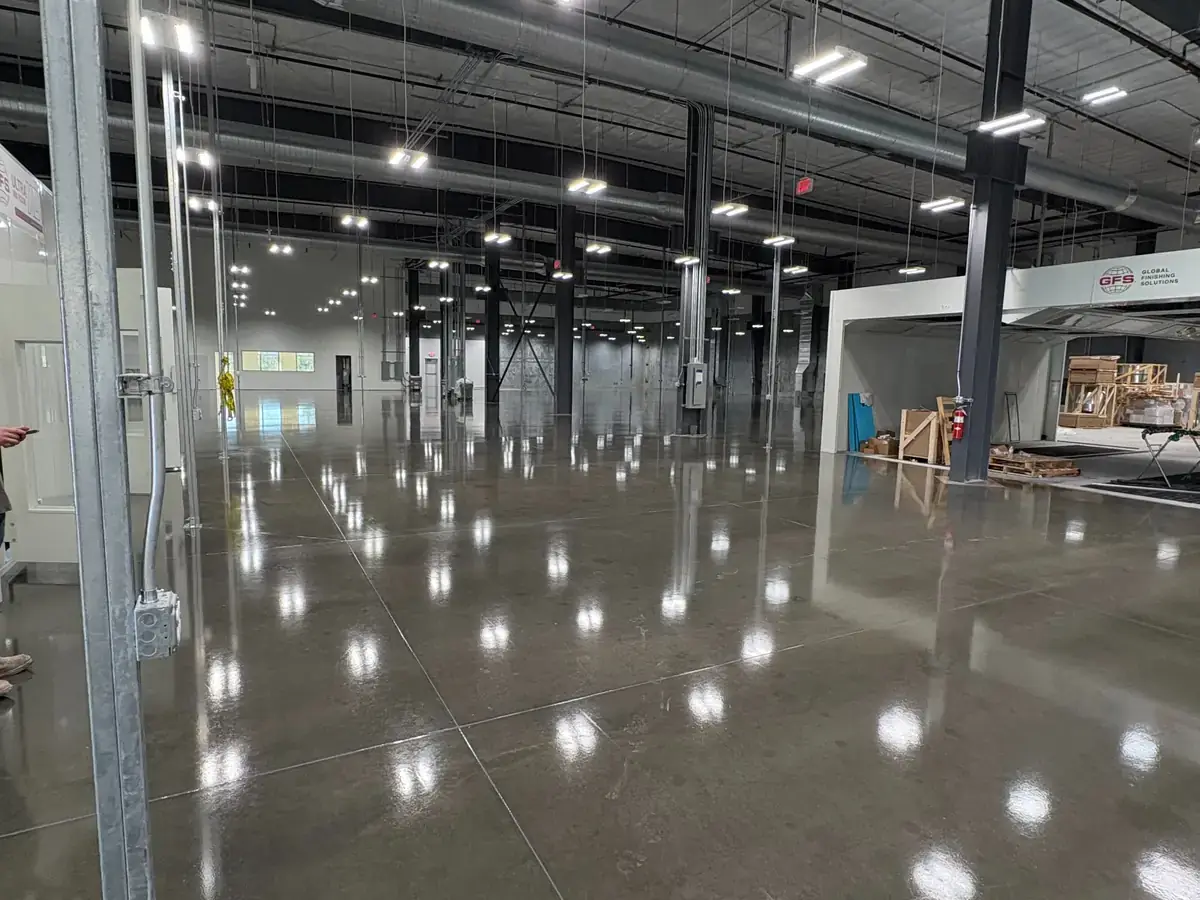
Production, aisles, washdown zones, maintenance areas, battery charging, laboratories and public-facing spaces can require very different floor performance within the same building.
Industrial flooring decisions should account for how the work gets installed—not only what the completed system can withstand. Shift schedules, production shutdowns, equipment moves, cure times, ventilation, odor restrictions, access routes and the sequence of returning areas to service can drive the system choice.
Diamond works with the facility and project team to define realistic production zones and installation windows. In some environments, a technically excellent system with the wrong cure or shutdown requirement is still the wrong solution.
Chemical resistance, slip texture, cleanability, impact resistance and maintenance expectations should be based on the actual process. Diamond wants the specification to reflect the service environment rather than relying on a generic industrial coating schedule.
Review a Manufacturing Scope →Real Diamond work showing sealed concrete, preparation and resinous system capability in industrial settings.
Industrial sealed-concrete work across an expansive manufacturing environment.
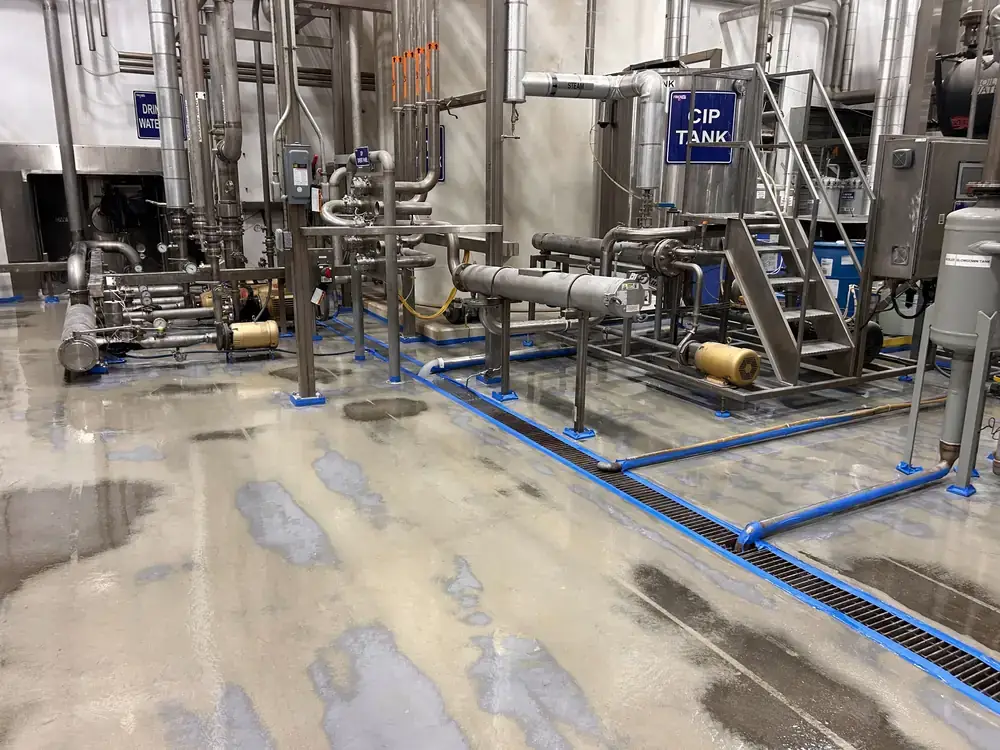
Floor preparation coordinated around equipment, existing systems and production constraints.
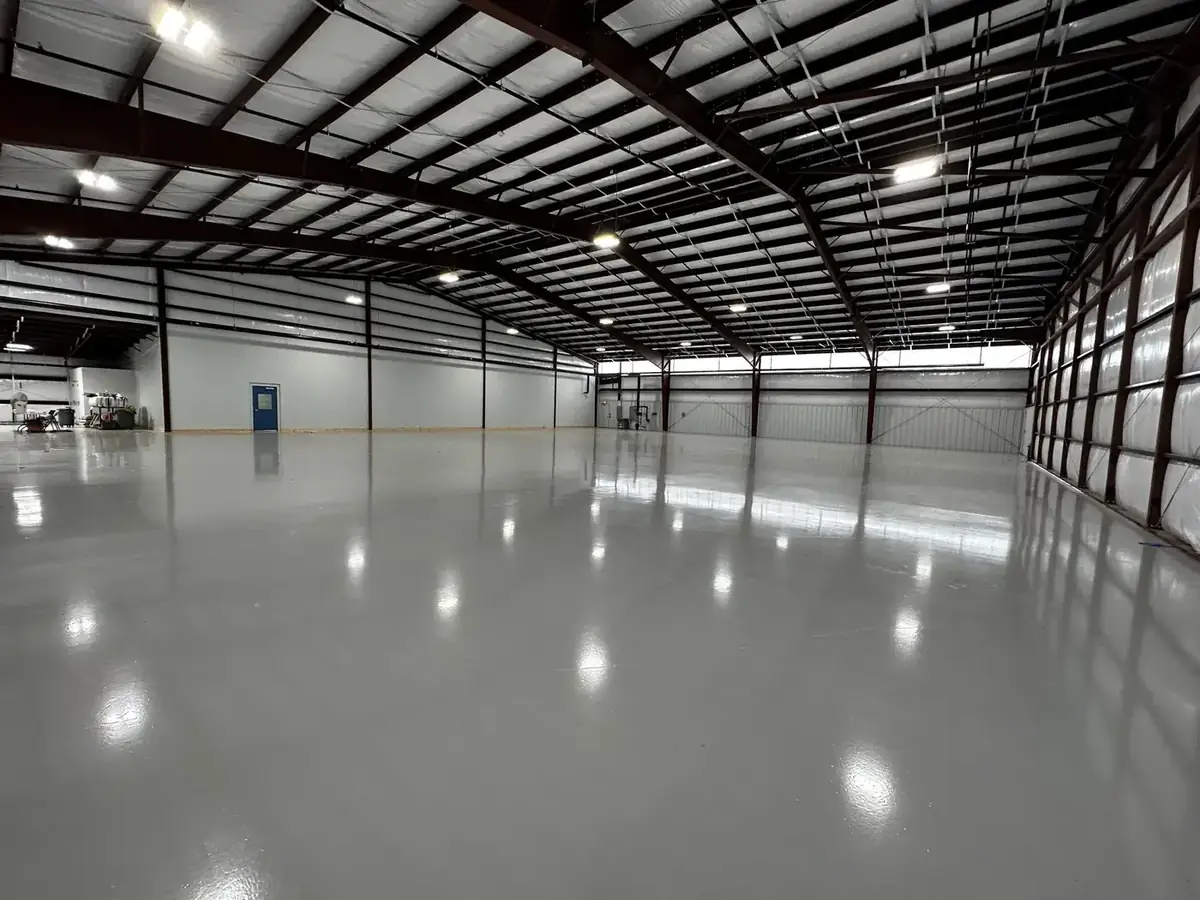
Large-area seamless system representative of demanding industrial coating execution.
Industrial floors fail when the service environment and installation conditions are treated as afterthoughts.
No. Epoxy can be an excellent component of an industrial system, but chemistry, thickness, topcoat, texture and substrate preparation must match the use. Some environments are better served by polished concrete, sealed concrete, urethane cement or another resinous build.
Yes. Shutdown and phased work are common considerations in industrial flooring. The scope should be planned around realistic preparation, installation, cure and return-to-service times rather than compressing the schedule after the system is selected.
Texture should reflect contamination, cleaning method, pedestrian or vehicle use and maintenance expectations. More texture can improve traction but can also change cleanability, so the correct balance is project-specific.
Yes. Diamond is Texas-based and selectively mobilizes nationwide for qualified industrial projects where scale, technical scope and execution requirements justify national deployment.
We’ll review the operating requirements and help identify a floor-system path that can actually be executed in the facility.