Mechanical preparation
- Concrete grinding and surface profiling
- Existing coating and adhesive removal
- Failed resinous system removal
- High-spot and surface correction
- Edge, perimeter and detail preparation
Grinding, coating removal, profiling, repairs and slab remediation for commercial and industrial projects where the next floor system depends on getting the substrate right.
Most floor failures are expensive long after the preparation crew has left. Existing coatings, adhesives, contaminants, weak surface paste, repair materials, moisture conditions, slab damage and unknown previous work all affect what can be installed successfully next.
Diamond treats surface preparation as a defined scope. We want to understand what is on the slab, what needs to come off, what profile the next system requires, what repairs belong in the package and what conditions could change production once the floor is opened up.
See how we review floor risk before mobilization →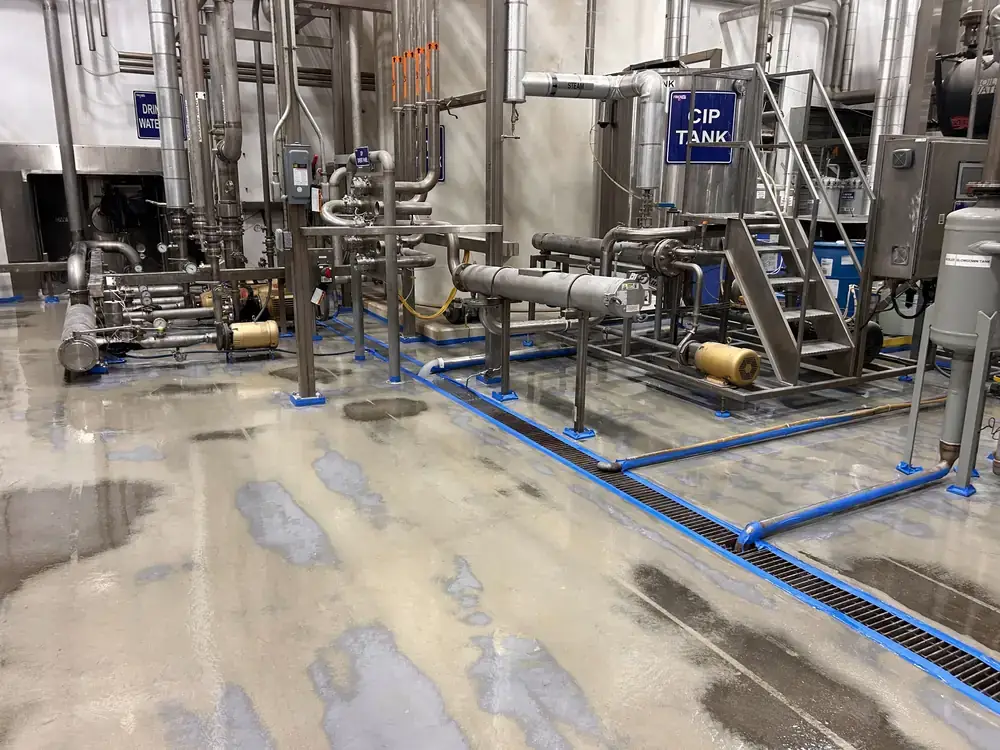
The exact process depends on the existing floor and the system that follows. The objective is not simply to make the concrete look clean—it is to create a substrate the specified finish can actually bond to and perform on.
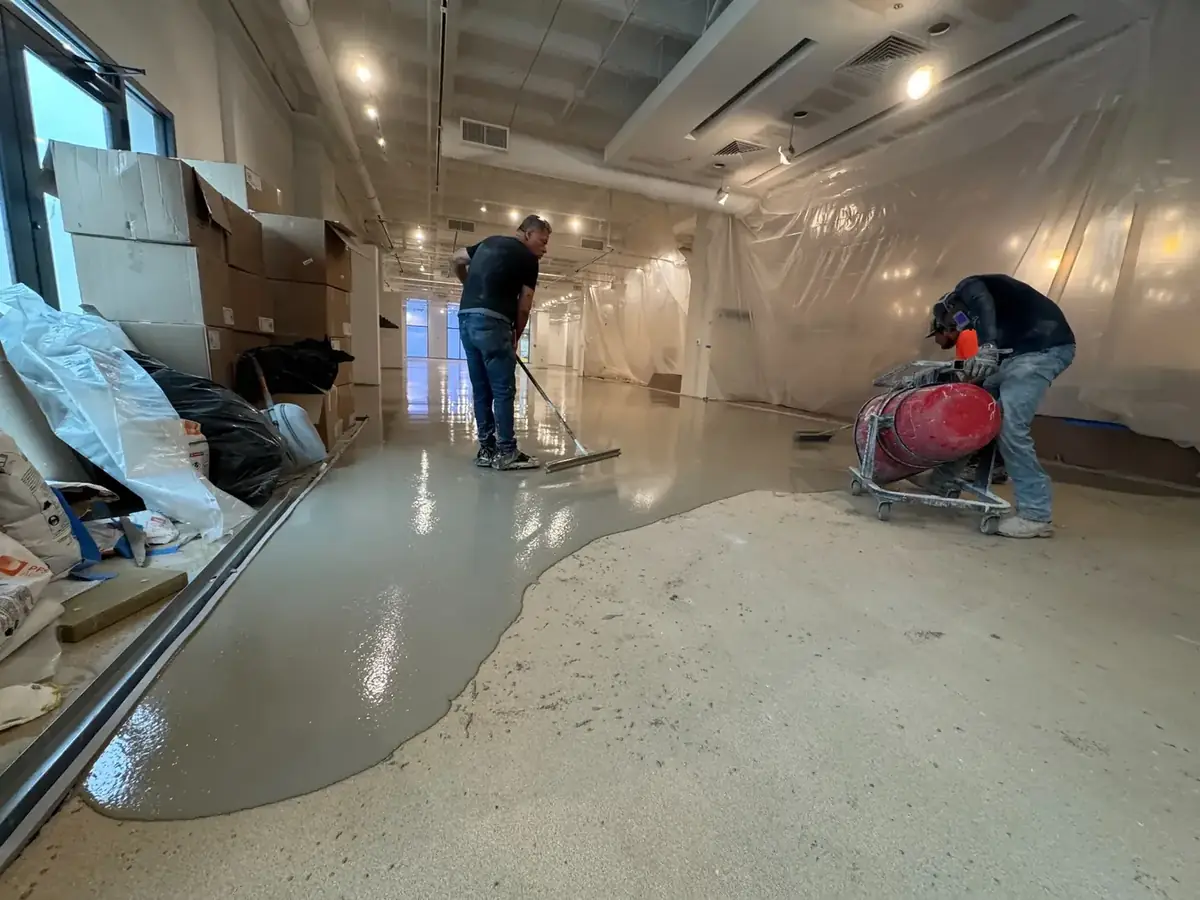
Renovation and operating-facility work can hide several generations of flooring under the visible surface. A coating may be bonded in one area and failing in another. Adhesive can remain below a newer system. Oil or process contamination can affect only specific zones. Repairs may use incompatible materials. These conditions change production rates and sometimes change the recommended floor system.
When possible, we identify those unknowns with test areas, visual review, project history and coordination with the GC or facility team before assigning a production assumption to the full floor.
A polished slab, high-build epoxy, urethane cement, ESD floor, waterproofing system and traffic coating do not all require the same substrate. Diamond coordinates preparation around the actual finish requirement rather than separating prep from the performance expectation.
Review a Prep Scope →A verified 120,000 SF warehouse rehabilitation shows how coating removal and repair can become the first stages of a polished-concrete finish rather than a disconnected prep package.
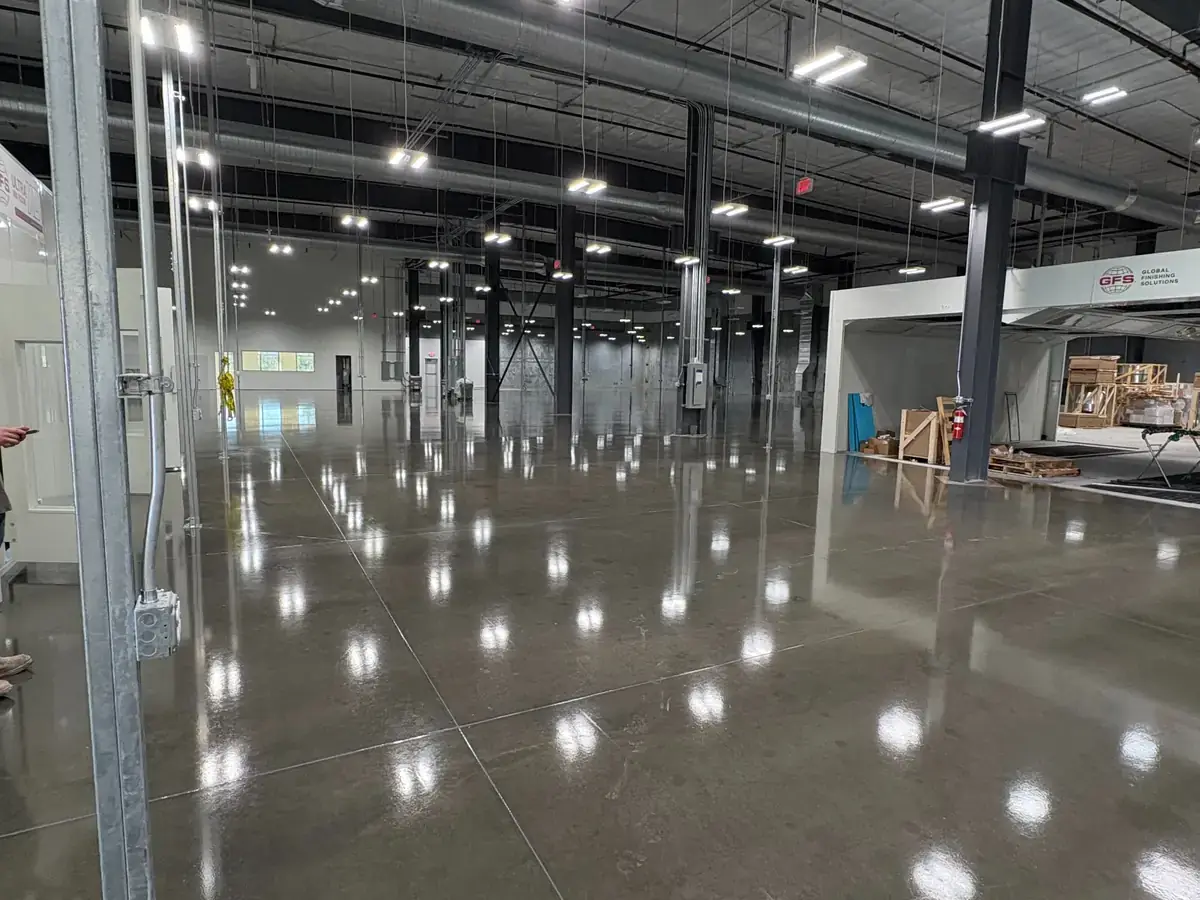
Existing coating removal and surface repair led into a 70-metal-to-400-resin polished-concrete sequence with densifier and guard.
Read the case study →Repair and preparation work completed as part of the floor-system package.
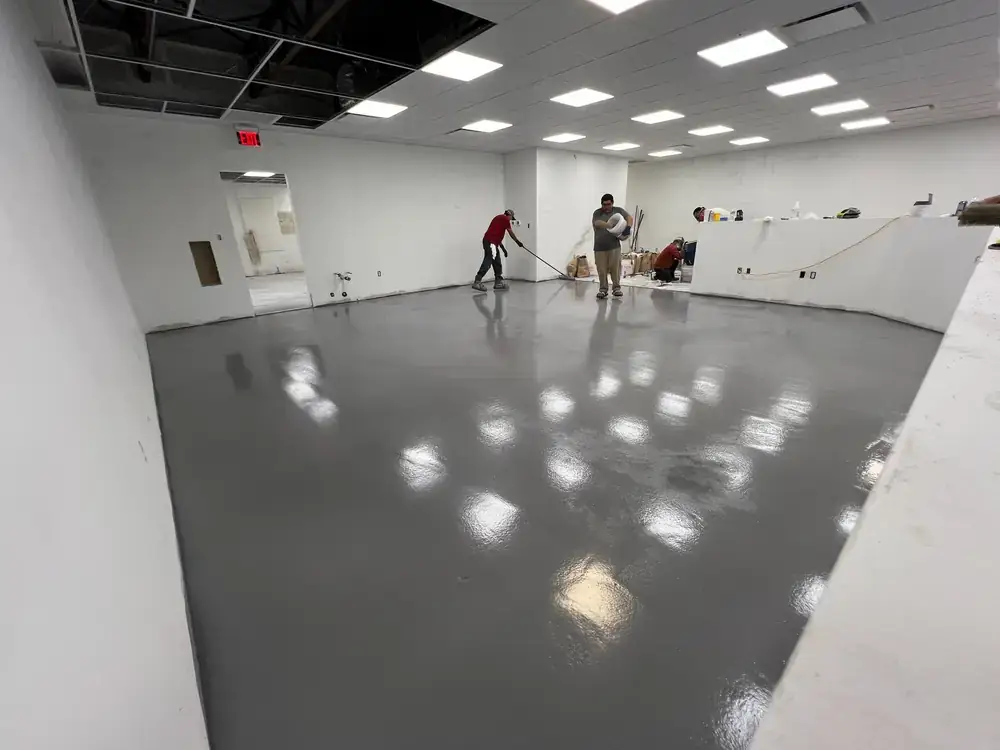
Surface preparation coordinated to the resinous system that follows.
Preparation pricing and production depend heavily on existing conditions. These are the items worth clarifying before the work starts.
Sometimes, but removal rates depend on coating thickness, chemistry, adhesion, number of layers, underlying repairs and contamination. For uncertain existing systems, test areas can significantly improve the production assumption.
Yes, on qualified commercial and industrial scopes. We still want to know what system follows so the required profile, repair standard and acceptance criteria are clear.
The control plan depends on the equipment, space and facility requirements. Vacuum-assisted mechanical prep, work-zone separation, sequencing and housekeeping expectations should be established with the project team before mobilization.
Yes, selectively. National mobilization makes the most sense for large, technical or schedule-critical work where Diamond is providing meaningful value beyond commodity grinding.
We can review what is known, identify the major unknowns and help define the preparation path before the floor becomes a field surprise.