Polished concrete systems
- Commercial and industrial concrete polishing
- Specified aggregate-exposure targets
- Low, medium and high-reflectivity finish goals
- Densification, guard and final burnishing
- Restoration and maintenance polishing
Diamond delivers polished concrete for large commercial, industrial, warehouse, manufacturing, institutional and mission-critical environments where slab condition, finish consistency, schedule and closeout matter.
The finished appearance and performance are shaped by the concrete that already exists. Aggregate exposure, finishing history, cure products, flatness, patching, joints, previous trade damage and access conditions can all change the result.
Our preconstruction approach is built around identifying those variables before production. That gives the project team a clearer expectation for finish, scope boundaries, sequencing and acceptance criteria before large areas are processed.
See our preconstruction approach →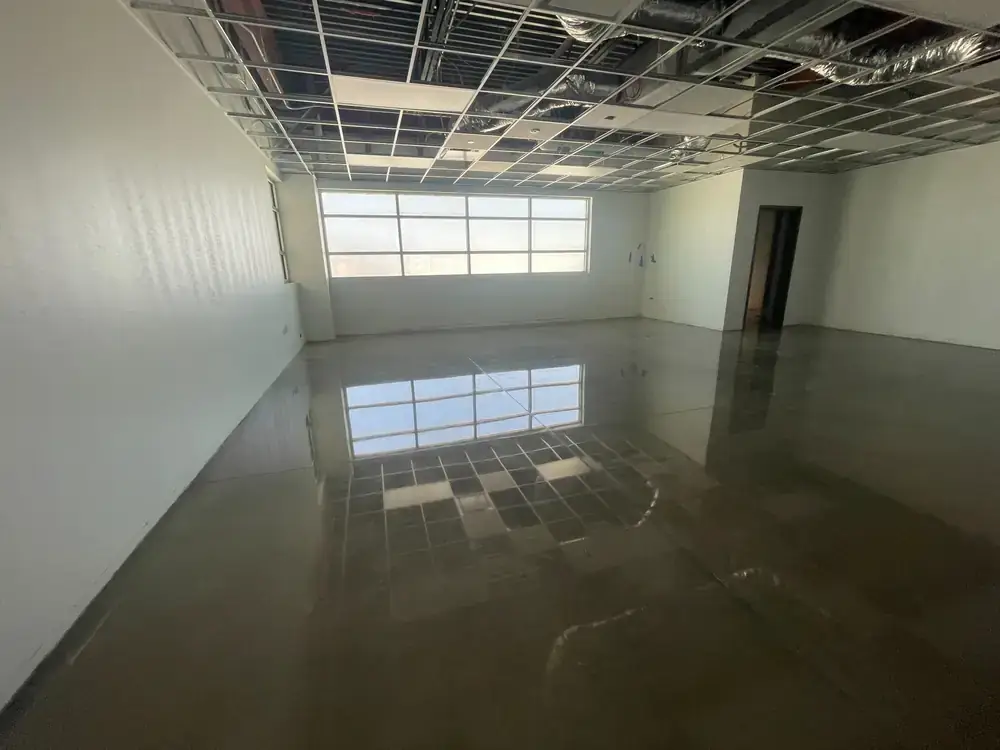
Diamond can execute the polishing scope as a complete floor package or coordinate it with joint work, repairs, remediation and protection requirements.
“Polished concrete” can describe very different visual outcomes. Aggregate exposure, sheen, color variation, patch visibility and edge conditions should be discussed early rather than discovered at turnover.
For larger work, we want the specification, slab history and field condition to agree. When they do not, we identify the conflict and help the project team decide how the floor should actually be executed.
On active construction projects, damage often happens long before the polishing crew arrives. Cure methods, layout markings, spills, lifts, trade traffic, sawcut timing and patch products can permanently affect the finished slab. We work with the GC and project team to surface those risks early.
Discuss the Floor Scope →Real Diamond project photography and verified project stories. The 120,000 SF example below shows the active polishing process rather than implying a finished-floor photo we do not have.
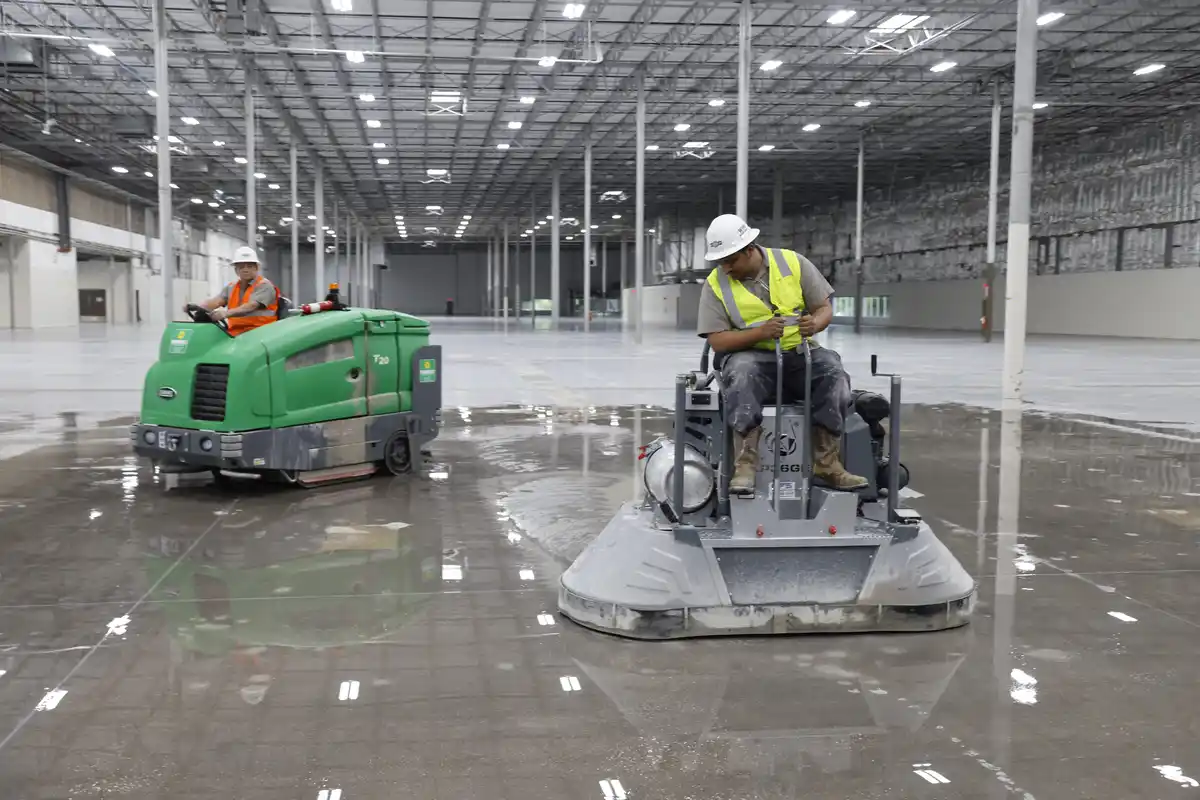
Existing coating removal, surface repair, 70-grit metal-bond grinding through 400-grit resin, then densifier and guard.
Read the case study →Polished concrete used as a finished architectural surface in a public-facing interior.
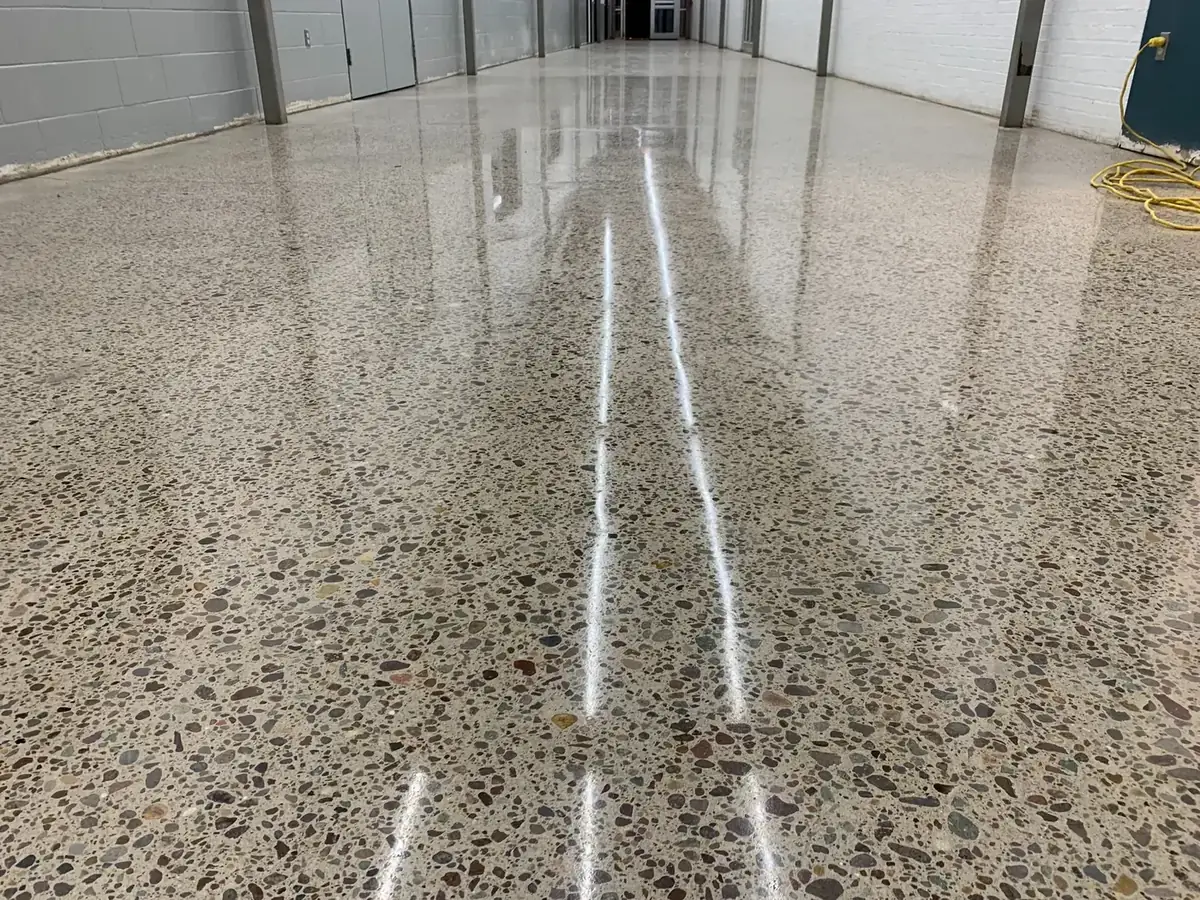
Close-range finish quality where processing consistency becomes visible.
The correct answer depends on the slab and project requirements, but these are the conversations we want to have early.
Often, yes—but previous coatings, adhesives, contamination, patching, slab damage and aggregate exposure can change both cost and final appearance. Existing conditions should be evaluated before a finish is promised.
As early as practical. On new construction, cure method, trade protection, sawcut timing and repair materials can affect the finished floor months before polishing begins.
Yes, when the operating environment and slab are suitable. Traffic, maintenance expectations, chemical exposure, joints and equipment use should be considered in the system decision.
Yes. Diamond is Texas-based and selectively mobilizes nationally for qualified commercial, industrial and mission-critical projects where scope and scale justify the deployment.
Upload plans and specs or share the bid-package link. We’ll review the scope and identify the next step.