
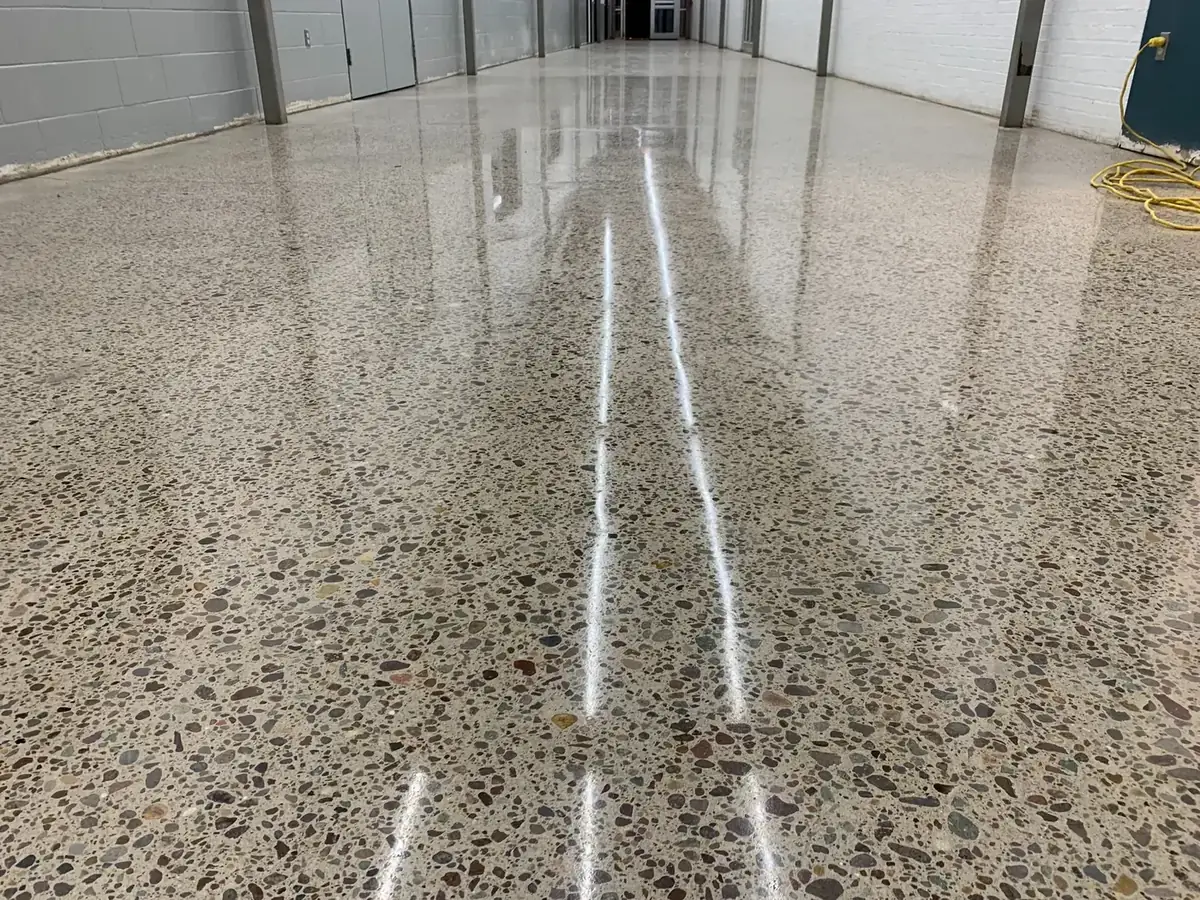
Densification is not a topical shine product. It is a chemical treatment used within the polishing process to react with available compounds in the concrete and help create a harder, less porous surface that can be refined more effectively.
What a concrete densifier does.
Common concrete densifiers use silicate-based chemistry. When applied under the right conditions, the material penetrates the concrete surface and reacts with available calcium compounds to form additional cementitious material within the surface zone. The practical objective is a denser, harder surface—not a film sitting on top of the slab.
That distinction matters. A guard, stain protector or topical sealer may be part of a polished-concrete system, but it is not the same thing as densification.
Why it matters during polishing.
Surface hardness
A properly densified surface can become more resistant to abrasion and surface wear. That gives the polishing process a stronger surface to refine and can support long-term performance in commercial and industrial traffic.
Dusting control
Weak or untreated concrete surfaces can release fine dust as they wear. Densification can reduce surface dusting by strengthening the near-surface concrete, though it does not correct every weak-slab or contamination problem.
Refinement and clarity
Polishing tools work best when the concrete responds consistently. A denser surface can support more uniform refinement through the later polishing steps, but it does not create aggregate exposure, correct poor flatness or hide finishing defects.
The final floor still depends on the grinding sequence, slab condition, aggregate exposure target, tooling, edge work, joint/repair strategy and maintenance plan.
Where densification fits in the sequence.
The exact application point depends on the slab and the selected polishing system. It commonly occurs after initial grinding has opened and refined the surface but before final polishing is complete. The contractor needs enough surface access for penetration and enough remaining refinement steps to achieve the intended finish.
Application rate, dwell, cleanup and timing should follow the densifier manufacturer’s instructions and the polishing system being used. Overapplication or poor cleanup can create its own finish problems.
Not every slab responds the same way.
Concrete age, mix design, surface hardness, curing practices, finishing history, previous treatments and environmental exposure can all affect densifier penetration and polishing behavior. Renovation work adds another layer because the floor may contain old sealers, adhesives, oils, coatings or repairs that alter the response.
New construction
Coordinate cure methods, slab finishing, protection and polishing expectations early so the concrete reaches the polishing contractor in a usable condition.
Existing slabs
Investigate previous treatments, contamination, damage and repairs before assuming the floor will respond like new concrete.
Densification should support the use of the space.
Warehouses, schools, commercial interiors and industrial facilities do not all need the same appearance or maintenance strategy. A good polished-concrete specification should define the intended finish and performance while still allowing the contractor to adapt the polishing sequence to the actual slab.
That is also why mockups and early slab review can be useful. The project can align on aggregate exposure, sheen, repair appearance and concrete variation before the entire floor is processed.
Specific densifier chemistry, application and polishing sequence should follow the approved product/system requirements and project conditions. This resource is general technical guidance.