The lesson from this project is not that every polished floor will perform the same way for the same number of years. It is that correct installation and realistic maintenance can create a floor that is maintainable and renewable instead of disposable.
The original floor was built as a process.
Diamond installed a stained and polished concrete floor in a high-traffic facility in 2017. The original work followed the intended grinding, staining, polishing and protective-treatment sequence rather than compressing the floor into a single cosmetic step.
The owner also maintained the floor using the recommended cleaning approach. Those two sides—installation and maintenance—worked together over the following years.
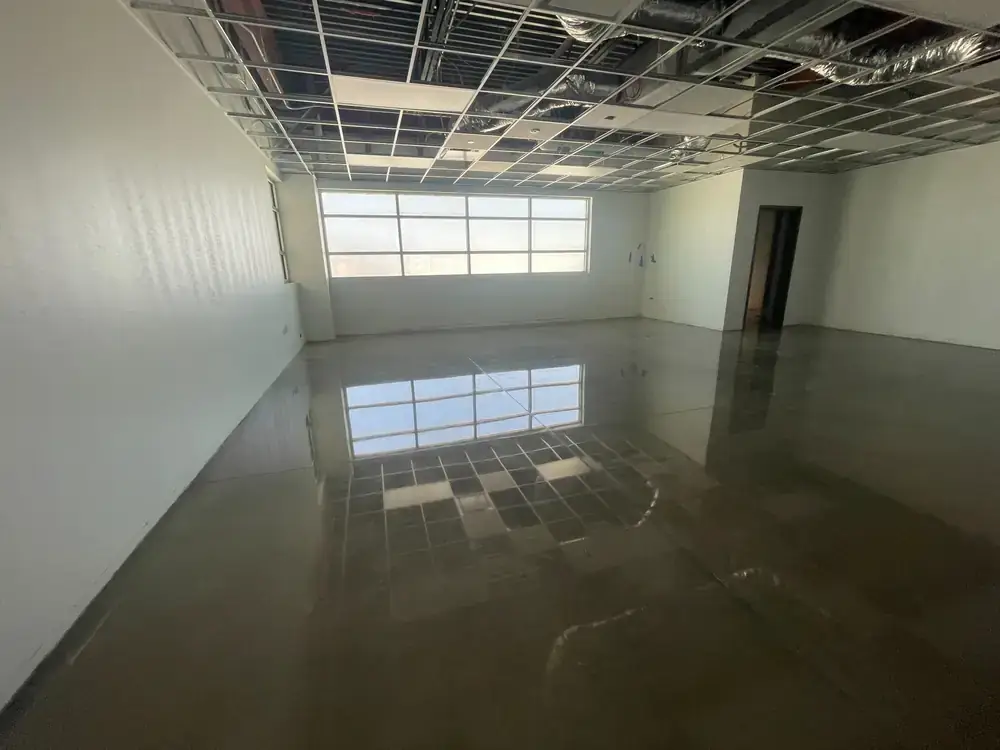
Years of use changed the appearance—not the basic value of the floor.
By 2025, after years of service, the customer wanted to bring back more of the original gloss and visual clarity. The answer was not demolition and replacement. The existing polished surface could be cleaned, evaluated and mechanically/refinement-restored to improve its appearance again.
That distinction is one of the practical lifecycle advantages of a well-executed polished-concrete system. When the concrete is still serviceable, loss of gloss can sometimes be addressed through restoration rather than a complete new floor assembly.
The floor has to be evaluated first. Dirt, worn guard, scratching, staining, slab damage and deeper surface deterioration can require different restoration approaches.
What this project teaches about lifecycle.
1. Installation shortcuts show up later.
Grinding sequence, densification, stain application, final refinement, edges and protection all affect what the floor becomes under real traffic. A polished floor cannot be reduced to a gloss reading on turnover day.
2. Maintenance changes the outcome.
Consistent particulate removal, appropriate cleaning chemistry, spill response and periodic maintenance help preserve the surface. Even a good floor can look poor if the cleaning process continually leaves residue or grinds abrasive soil into it.
3. Dull does not automatically mean failed.
Before replacing a polished floor, determine what has actually changed. A surface that has lost clarity may have a very different solution than a slab with structural damage, contamination, severe staining or failed repair work.
4. A lifecycle plan belongs in the original project.
The owner should understand how the floor will be cleaned, how appearance will be evaluated and what periodic restoration may look like long before the first refresh is needed.
Install for service
Align the slab, polishing sequence, repairs, protection and final appearance around how the space will actually operate.
Maintain for renewal
Use a defined maintenance program and evaluate restoration options before assuming age or reduced gloss requires replacement.
Restoration should begin with diagnosis.
A useful restoration review looks at the floor’s original system if known, current appearance, traffic pattern, cleaning process, stains, scratches, repairs and owner expectations. Test areas can help establish what level of refinement or treatment is appropriate before committing to a full-floor process.
That same logic applies to older floors Diamond did not originally install. The first question is not “how do we make it shiny?” It is “what is this floor, what has happened to it, and what outcome is realistic now?”
This project lesson is based on Diamond’s previously published account of a 2017 installation and a later restoration documented in 2025. It is an example, not a performance guarantee for other slabs or facilities.