The fastest way to dull a polished floor is usually not dramatic damage. It is fine abrasive soil being left on the surface and repeatedly ground into the concrete by foot traffic, carts and equipment.
Start with soil removal.
Fine dust, sand and grit act like abrasive media under traffic. Frequent dry microfiber dust mopping or another facility-appropriate particulate-removal method is one of the simplest ways to preserve the finish.
Entry areas deserve special attention because they collect the material that gets tracked through the rest of the building. Well-maintained walk-off mats can reduce the amount of grit reaching the polished surface, provided the mats themselves are cleaned and managed correctly.
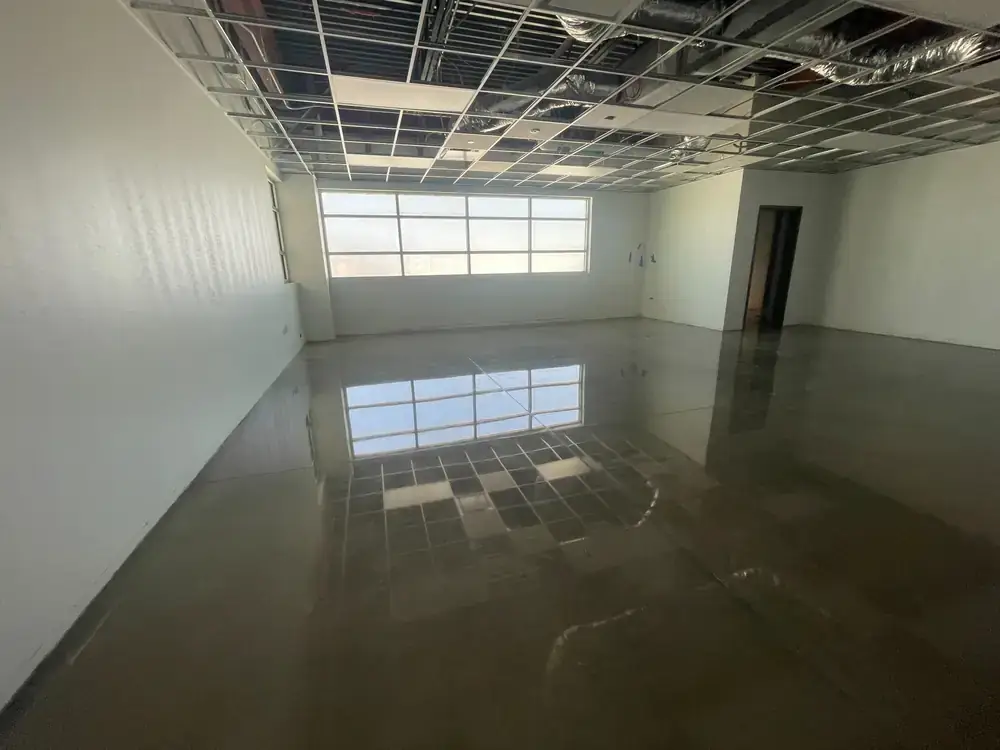
Use cleaning chemistry that fits polished concrete.
Routine wet cleaning should use a cleaner appropriate for the installed polished-concrete system and the facility’s soil load. Neutral or manufacturer-recommended cleaning chemistry is usually preferred over harsh acids, aggressive degreasers or improvised products that can etch, haze or leave residue on the surface.
More chemical is not automatically more cleaning. Incorrect dilution can leave film that attracts soil or makes the floor look dull even when the concrete itself is still in good condition.
The contractor can deliver a high-quality finish, but the owner’s maintenance process determines what traffic, soil and spills do to that finish after turnover.
Auto-scrubbing should clean—not grind the floor.
Large commercial and industrial floors often rely on automatic scrubbers. Pad/brush selection, chemical choice, dilution, water recovery and machine maintenance all affect the result. An overly aggressive pad can change the appearance; a dirty recovery system can simply redistribute soil.
A practical facility routine
- Remove abrasive dry soil frequently.
- Clean spills promptly using chemistry compatible with the polished floor.
- Auto-scrub on a schedule matched to traffic and soil load.
- Keep scrubber pads/brushes and solution/recovery systems clean.
- Avoid dragging metal, pallets or damaged equipment across the surface.
- Use appropriate protection during construction, remodel or equipment moves.
Spill response still matters.
Polished concrete can be treated to improve stain resistance, but it should not be treated as chemically immune. Oils, dyes, acidic liquids and process chemicals can affect appearance if they remain on the floor. Facilities should build spill response around the actual substances used in the space.
Know when the floor needs refinement instead of replacement.
Traffic can gradually reduce gloss or clarity even when the concrete is structurally sound. Periodic burnishing, guard maintenance or a controlled repolishing/refinement process may restore appearance without removing and replacing the floor.
The right response depends on what has changed. A floor that is dirty, contaminated, worn, scratched or physically damaged does not need the same treatment.
Routine maintenance
Soil removal, compatible cleaning, spill response and facility-specific auto-scrubbing keep the existing finish operating as intended.
Periodic restoration
When traffic has reduced clarity or gloss, evaluate burnishing, guard renewal or additional refinement before assuming the floor needs replacement.
Closeout should include the maintenance plan.
The best time to establish maintenance is before the facility begins operating. Cleaner, dilution, pad/brush type, equipment, spill response, initial maintenance frequency and the contact path for restoration questions should be understood at turnover.
That is why maintenance guidance belongs in the project closeout package—not in an email somebody has to find three years later.
Always follow the approved polishing/guard manufacturer’s current maintenance guidance for the installed system. Facility use and exposure may require a project-specific maintenance plan.