Diamond installs both polished concrete and resinous systems. That matters because system selection should start with the environment rather than with a contractor trying to sell the only finish they install.
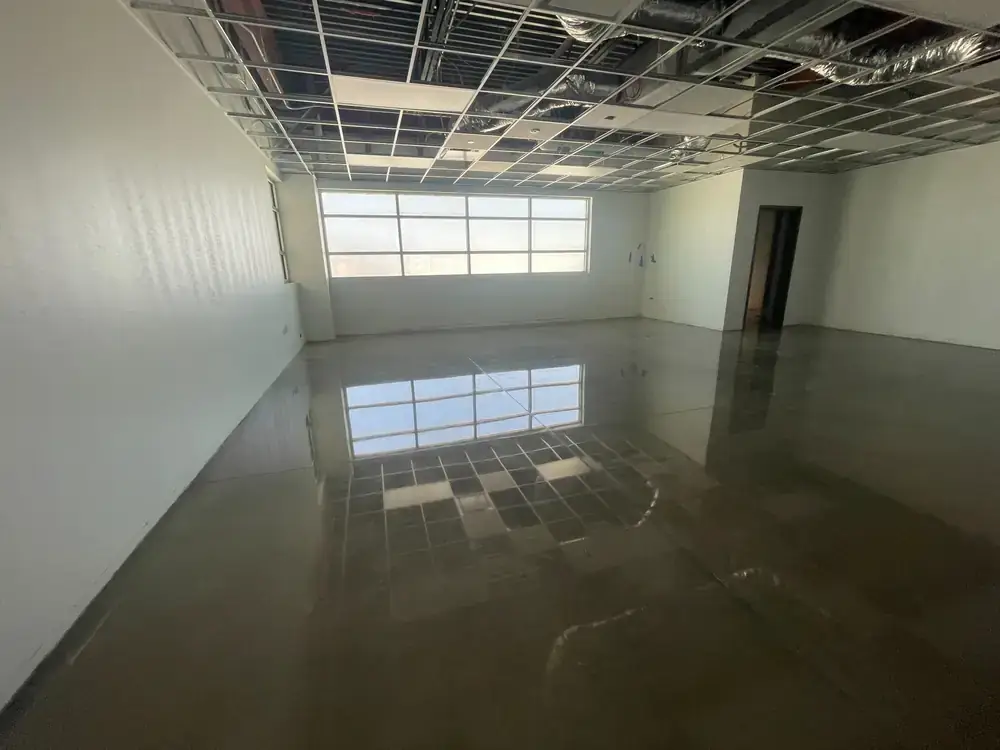
Polished concrete uses the slab as the finish.
Polished concrete mechanically refines the existing concrete surface through grinding, densification and progressively finer tooling. It can provide a durable, low-build finish with a natural concrete appearance and a maintenance model centered on cleaning and periodic refinement rather than recoating.
But polished concrete also reveals the slab. Aggregate exposure, cracks, patches, finishing variation, construction damage and previous treatments can become part of the finished visual result. A poor or inconsistent slab does not disappear because it is polished.
Polished concrete tends to fit when:
- The owner wants the concrete itself to be the architectural or industrial finish.
- Large floor areas favor a low-build, repeatable maintenance strategy.
- Chemical exposure and constant wet service are not the primary performance drivers.
- The slab condition and appearance expectations can be aligned before final polishing.
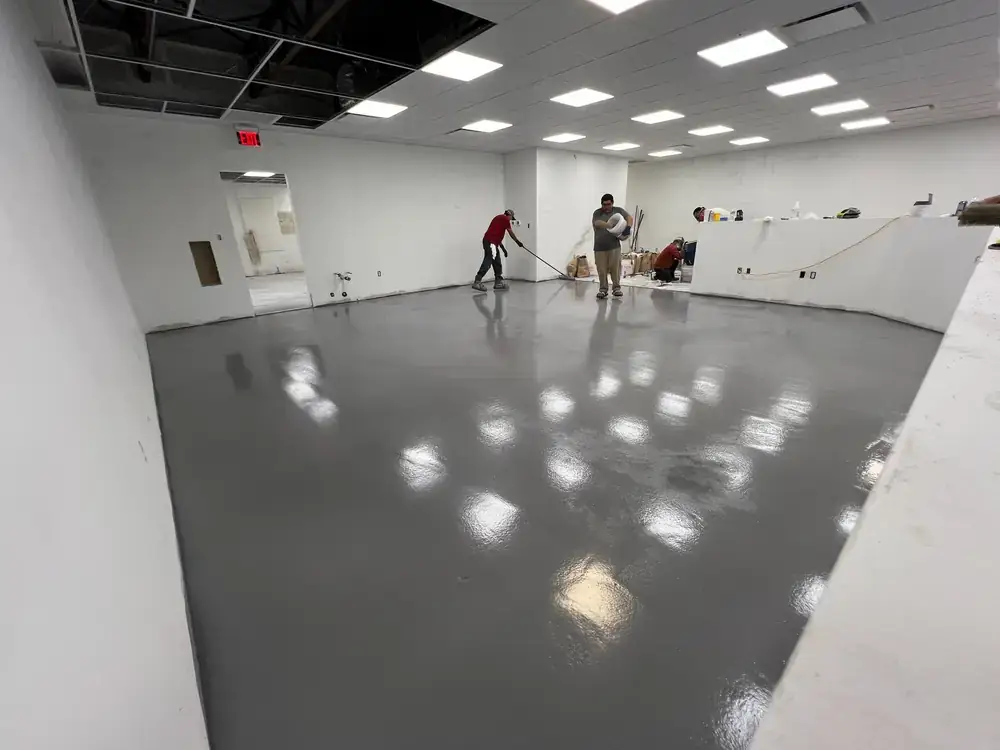
Resinous flooring adds a protective system over the slab.
Resinous flooring can be built with epoxy, urethane, polyaspartic, urethane-cement and other compatible components. The system can be designed around thickness, chemical resistance, texture, color, cleanability, thermal exposure, slip resistance and return-to-service requirements.
The flexibility is a major advantage—but it does not remove the importance of the substrate. Preparation, repair, moisture compatibility, terminations and transitions are part of the resinous system whether they are obvious in the finish schedule or not.
Resinous flooring tends to fit when:
- The environment needs a defined protective layer over the concrete.
- Chemicals, washdown, sanitation, texture or cleanability drive performance.
- Color, pattern, line striping or other visual control is important.
- The project needs a specific build thickness or specialty characteristic such as conductive/static-control performance.
Compare the operating conditions, not just first cost.
Polished concrete
Consider slab appearance, aggregate exposure, repair visibility, daily maintenance, stain risk, traffic and long-term refinement/restoration.
Resinous flooring
Consider chemistry, thickness, moisture, texture, cleaning, thermal conditions, UV exposure, shutdown windows and future recoating.
Both systems can deliver strong lifecycle value when they are placed in the right environment and maintained correctly. Both can disappoint when the project chooses them for the wrong reason.
Start with traffic, chemicals, moisture, cleaning, downtime, design intent, slab condition and maintenance capability. The system choice should follow those answers.
Sometimes one project needs both.
Large commercial and industrial projects often include multiple room types. Open areas may make sense as polished concrete while process rooms, restrooms, specialty spaces or controlled environments receive resinous systems. The coordination issue then becomes transitions, joints, elevations, sequence and protection between the different floor assemblies.
Questions to answer before choosing.
- What does the floor encounter every day?
- How frequently will it be wet-cleaned or exposed to chemicals?
- What maintenance resources will the owner actually have?
- What does the existing or new slab look like?
- How much shutdown or cure time is available?
- Does the design require a natural concrete appearance or controlled color/texture?
- Are there moisture, ESD, thermal or hygiene requirements?
- How will the floor terminate at doors, drains, joints and adjacent finishes?
System performance depends on the complete project conditions and selected manufacturer assembly. This comparison is intended to frame the decision, not replace project-specific specification and manufacturer review.