
Specifications create a common target for the project. Problems start when the team treats the product name as the entire target and misses the performance requirements, substrate assumptions, installation details or acceptance criteria surrounding it.
Start with intent, then trace the named system.
A flooring specification may identify a manufacturer, a product family, a thickness, a texture, a gloss target, a testing requirement or a complete assembly. Each item matters for a different reason. Before suggesting an alternate, the contractor needs to understand which requirements are performance-critical and which are simply the basis of design.
That means reading beyond the product paragraph. Finish schedules, details, concrete notes, joint drawings, transition conditions, room use and Division 01 requirements can all affect what a compliant floor actually looks like in the field.
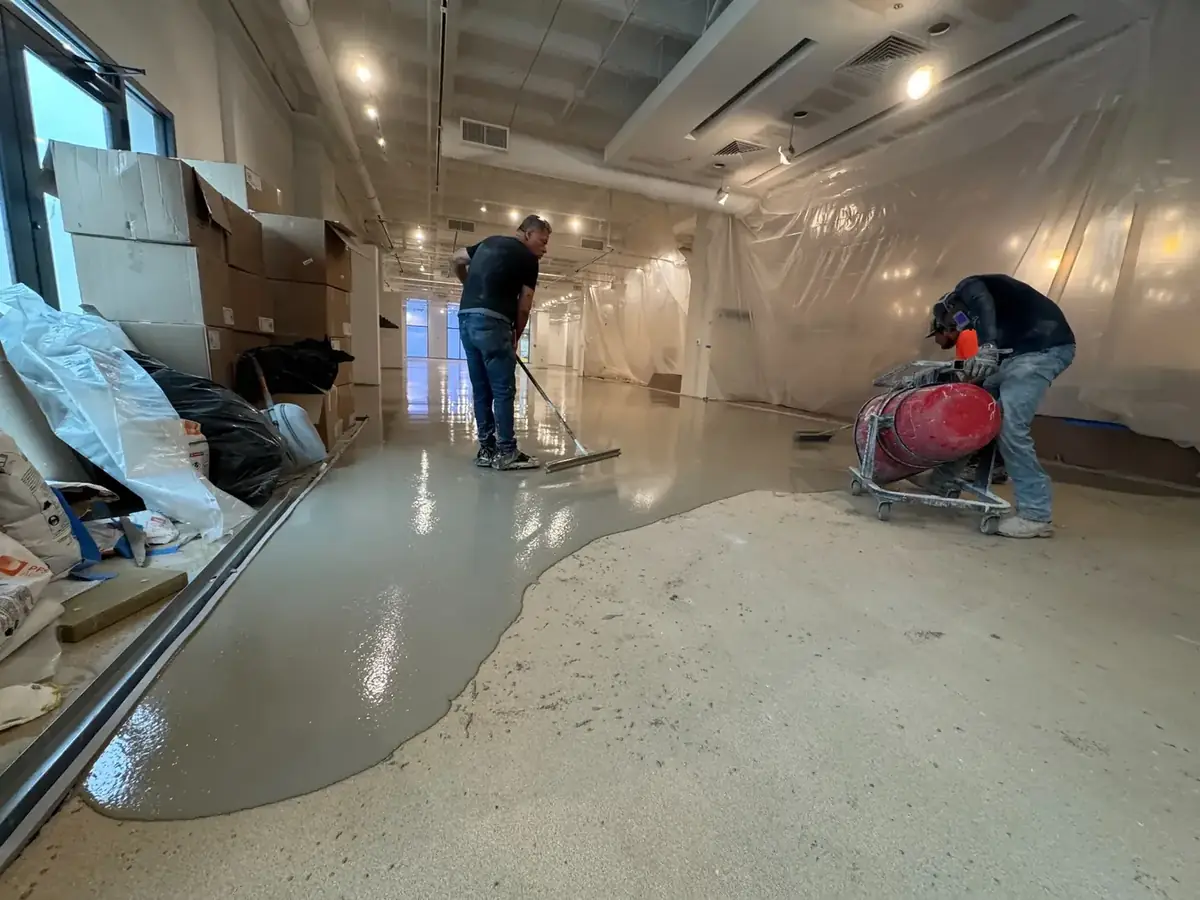
An approved equal should be equal where it matters.
“Approved equal” should not mean “similar color and cheaper.” A responsible alternate should be evaluated against the project requirements that matter to the owner and designer. Depending on the floor, those may include abrasion resistance, chemical exposure, slip resistance, thickness, cure time, cleanability, UV exposure, electrical performance, appearance, warranty conditions and maintenance expectations.
The better question is: “Can this alternate meet the project intent, fit the actual field conditions and be approved without creating a hidden scope or performance gap?”
What a useful alternate package should address
- Original specified system and the proposed alternate.
- Required performance characteristics that have been compared.
- System build, thickness, texture and finish differences.
- Substrate preparation and moisture requirements.
- Cure time / return-to-service implications.
- Warranty or manufacturer-support differences.
- Any detail, transition or termination changes.
- Lead-time, sequencing or budget impact where relevant.
Field conditions can make a technically compliant product a poor project choice.
A product can look correct on paper and still create problems if the slab, access or schedule does not support it. An existing coating may require more removal than assumed. A moisture-sensitive system may conflict with slab conditions. A heavy broadcast system can affect elevations at doors or drains. Cure time can conflict with a shutdown window. A high-gloss finish may not fit the owner’s traction or maintenance expectations.
That is why Diamond treats the flooring specification as one input into an execution plan—not as an isolated material list.
Design intent
What performance, appearance, service condition and acceptance criteria is the specification protecting?
Execution reality
Can the slab, schedule, access, sequence and surrounding details support that system as written?
Manufacturer relationships help most when they support the project—not the sale.
Manufacturer technical representatives can be valuable in evaluating assemblies, confirming details, supporting submittals and clarifying product limitations. The goal should be a documented system that the designer, GC, installer and manufacturer understand the same way before the work reaches the field.
Diamond installs multiple system families and does not need every project to land on the same chemistry or brand. That gives us room to focus on what the floor needs to do and how the project intends to build it.
Good specification review reduces post-award reset.
The strongest preconstruction outcome is not simply an approved submittal. It is a scope that survives award: the estimate, clarifications, system, details and schedule assumptions move into project management without forcing the operations team to rediscover the job.
That continuity is one of the reasons we built the Diamond Execution Room around Preconstruction → Handoff → Mobilization → Production → Quality → Closeout.
Product substitutions and approved equals remain subject to the project documents, design authority, manufacturer requirements and formal approval process. This resource is general planning guidance.